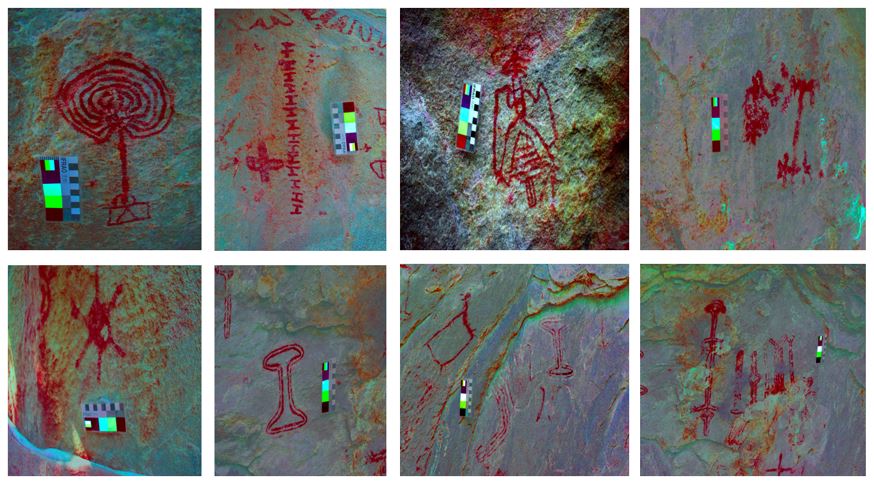
India is one of the richest regions in the world for prehistoric rock art. More than 6,000 painted rock shelters have been discovered across India. Rock art has been documented across a vast geographical expanse of India, extending from the southernmost Agasthya Mountains in Tamil Nadu to the high-altitude deserts of Ladakh and Zanskar in the north, and from Gujarat in the west to Odisha, Assam, and Manipur in the east.
The rock art found worldwide is a testament to the expressions of our ancestors. India is one of the major regions of rock art in the world, along with Africa and Australia.
The antiquity of rock art in India goes back to the Acheulian period. This is the archaic expression of human cognition. It serves as a reliable document to demonstrate human presence in a remote geological setting. No other archaeological sources from the human past can give us as much information as rock art does. Rock art is the medium through which the culture, lifestyle, aesthetic sense and social structure of the past can be reconstructed. It also provides information about the past flora and fauna in a particular geographic area. Rock art is also associated with religious beliefs and rituals. According to Emmanuel Anati (1984),“Rock-art reveals the human capacities for abstraction, synthesis and idealisation; it describes social and economic activities and reveals practices, beliefs and ideas; it provides a unique insight into the spirituality, intellectual life and cultural adventures of our early ancestors, over a millennium”.
The whole process of creating rock art can be categorised into two parts –
a) Additive Process- In this process, the art is done by adding some pigments (colour) on the surface. Pictograph comes under this category.
b) Deductive Process- Under this category, Petroglyphs and Geoglyphs are included. This is done by removing grains from the rock surface.
Rock Art is broadly divided into three categories –
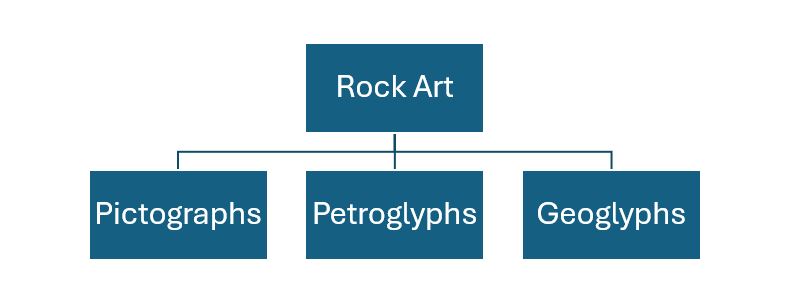
A) Pictographs- These are the drawings done on a rock surface with the help of natural colours. The colours are made with mineral pigments. The colours include different shades of red (ochre) and yellow made with Iron Oxides (hematite) or Manganese Oxides; black with Charcoal or shoot black; for the preparation of green pigments, perhaps Chalcedony was used; white was prepared with Limestone or fine Kaolin; and blue was obtained from plants and minerals. The paintings were done with thin wooden/bamboo brushes, feathers, porcupine quills, and sometimes with the hands. The binding material was probably prepared from water, saliva, beeswax, and plant and animal fats. Major concentrations of pictographs are found in central India within the Vindhyan complex and the adjoining sandstone region. However, this is found throughout the country and dominates rock art in India.
B) Petroglyphs- The pecking, bruising, engravings or groove marks on a rock surface done with the help of stone or metal tools are known as Petroglyphs. They were made with sharp stone tools and, later, with metals. This is considered the oldest among the rock art, and its antiquity goes back to the Acheulian period (Bednerik:1993a). Petroglyphs are found mostly in the Granitic and lateritic regions of the north, east, north-east and southern parts of India. However, this is also found in the sandstone regions along with the pictographs. Recently, a large number of Petroglyphs have been found in the lateritic region of Konkan in Maharashtra and Goa (Neumayer, 2016). Cupules are included under the category of Petroglyphs.
C) Geoglyphs- Geoglyphs are the large designs and motifs created by engraving, removing or adding rocks only from the border and creating an outline of the figures. These are made on the Earth’s surface, especially on rocky or desert landscapes. They vary in size from four to several metres. Geoglyphs have been found in South America, Africa and Australia.
Rock Art consists of the geometric and non-geometric motifs, symbols and abstract designs. A large variety of flora and fauna can be noticed in the rock paintings. Hunting and food-gathering activities, processions, recreational activities, war scenes, ritual practices, erotic activities, childbirth, and other day-to-day activities are depicted in the rock shelters.
The area of the Chhotanagpur plateau is also rich in prehistoric rock paintings. The motifs found here mainly comprised geometric designs and abstract symbols. The Chhotanagpur Plateau (Map 1) primarily extends across Jharkhand, but its reach extends considerably into four adjacent states: Chhattisgarh, Odisha, West Bengal, and Bihar. A standard five-state delineation is frequently cited, though broader geological interpretations often add minor fringes of Madhya Pradesh and Uttar Pradesh, bringing the total to six or even seven. Celebrated as the “Mineral Heart of India,” the plateau is a treasure trove of natural resources, boasting massive deposits of coal, iron ore, and bauxite.
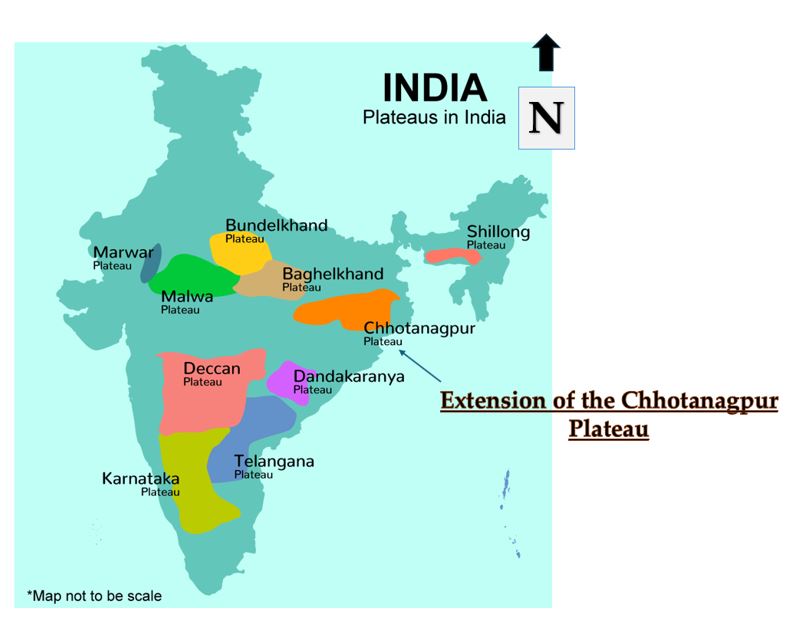
Map 1: Extension of the Chhotanagpur Plateau
Geology of the Jamui Hill Range
The Jamui hill range (Fig. 1) is one of the oldest geological formations in the Indian subcontinent, dating back to the Precambrian era. It is composed primarily of metamorphic and igneous rocks that have undergone multiple phases of deformation and metamorphism over the course of a billion years (Table 1.1) (Ghosh, 2007; District Disaster Management Plan [DDMP], Jamui, 2022). The undulating topography is the result of prolonged weathering and erosion. The north-eastern Chhotanagpur Plateau Gneissic Complex (CPGC), characterised by both occasional uplift and faulting and prolonged tectonic stability, has shaped the hill’s morphology. It comprised calc-granulite, amphibolite, and tremolite-actinolite schist, all of which are unclassified metamorphic rocks (Briefing Book of Eastern Region, 2012; Indian Minerals Yearbook, 2021). The migmatitic granite gneiss of the Chhotanagpur gneiss, mica schist, and quartzite of the Bihar mica belt, as well as younger granite, quartz veins, pegmatite, and dolerite of later intrusive igneous nature, have been found in the hill ranges. These metasedimentary sequences are found interlayered with the gneisses, indicating that they originated from original sedimentary protoliths, such as shales and siltstones.
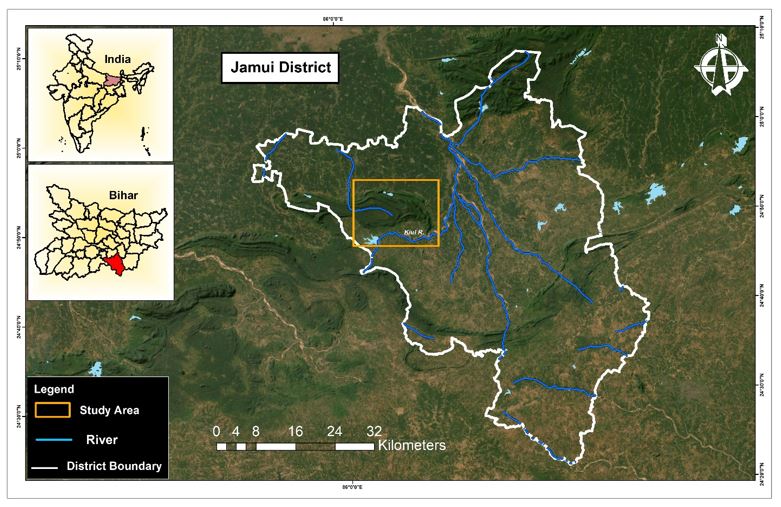
Figure 1: Map of the Jamui Hill Range, Bihar
| Sl. No. | Formation / Lithology | Lithological Group | Geological Age | Remarks |
| 1 | Jamui Formation | Quaternary Group of sediments | Upper to Middle Pleistocene | Unconsolidated fluvial and colluvial deposits |
| 2 | Quartzite, Quartz Schist | Chhotanagpur Group of rocks | Precambrian | High-grade metamorphics |
| 3 | Phyllite, Mica Schist | Chhotanagpur Group of rocks | Precambrian | Low to medium-grade metamorphics |
| 4 | Intrusive Granite and Pegmatite | Chhotanagpur Group of rocks | Precambrian | Acid intrusives |
| 5 | Chhotanagpur Gneisses and Schist | Chhotanagpur Group of rocks | Precambrian | Basement complex |
| 6 | Kharagpur Group of rocks | Kharagpur Group | Precambrian | Sedimentary–metamorphic sequence |
The north-eastern Chhotanagpur plateau region, which includes the present-day Jamui and Nawada districts of Bihar, is an understudied region. This region is characterised by rugged terrain, forested hills and water sources, providing a favourable environment for the early human occupation. The initial field surveys of the Jamui hill range have revealed a significant number of painted rock shelters with a wide variety of motifs, including anthropomorphic, zoomorphic, geometric, and abstract motifs. Such motifs are not only manifestations of artistic activity but also complex networks of meaning that can be connected to rituals, belief systems and socio-cultural organisation.
Despite its rich rock art heritage, the Jamui hill range has not been comprehensively studied. The symbolic and interpretive aspects of the rock art need to be studied alongside the stylistic analysis and classification of the rock paintings. The comparative study of rock paintings alongside ethnographic parallels will open a new dimension for interpreting the symbols in rock shelters. The present study thus attempts an extensive study of symbols present in the rock art of the Jamui hill ranges.
The hilly, forested Jamui region lies where the Vindhyan range meets the Chhotanagpur plateau, near the Kiul River. Its geology features crystalline rocks like granite, schist, and quartzite, with massive granite boulders scattered across. Dense forests in the region comprised of Sal, Mahua, Bamboo, and diverse edible tubers, roots, and wild fruits. Wildlife includes sloth bears, wild boars, nilgai, langurs, peacocks, eagles, cobras, and pythons. Rich in archaeology, the area contains stone tools, microliths, and painted rock shelters. Inhabited by the Santhal and Khairwar groups, the Yadava community in Tetariya Tanr calls these shelters ‘Kohbar’ and associates the ancient rock paintings with the mythical hero Veer Lorik.
My engagement with the rock art of the Jamui region began rather unexpectedly during my Masters in Archaeology at Deccan College, Pune. As part of the fourth-semester paper, I was required to undertake a dissertation and was seeking a suitable topic. During this period, I visited Banaras Hindu University and had the opportunity to meet Dr Sachin Kumar Tiwary, whose work in the field of rock art is well recognised. Upon discussing my academic interests, he suggested that I consider working on the rock art of the Jamui region. At the same time, he cautioned me that previous researchers had discontinued their work in this area due to various challenges. Despite this, I decided to explore the possibility and began familiarising myself with the region through the works of Dr A. K. Prasad, who has made significant initial contributions to the study of rock art in this area.
Subsequently, I undertook my Master’s dissertation on a selected locality within the Jamui Hill Range (Fig. 2). During this initial research, conducted in 2020, I discovered two new painted rock shelters (I named them Khairamaran Painted Rock Shelter and Kajri Tanr Petroglyph Rock Shelter) and realised the need for a more comprehensive and in-depth study of the region’s rock art, particularly with a focus on symbolic representations. I also recognised the importance of examining these motifs with the living ethnographic traditions of local communities. I explored these dimensions in my PhD research thesis submitted to Nava Nalanda Mahavihara, Nalanda, Bihar, in April 2026. During the PhD exploration, 5 new rock shelters have been discovered and named after the local name of the hill range over which they are located.
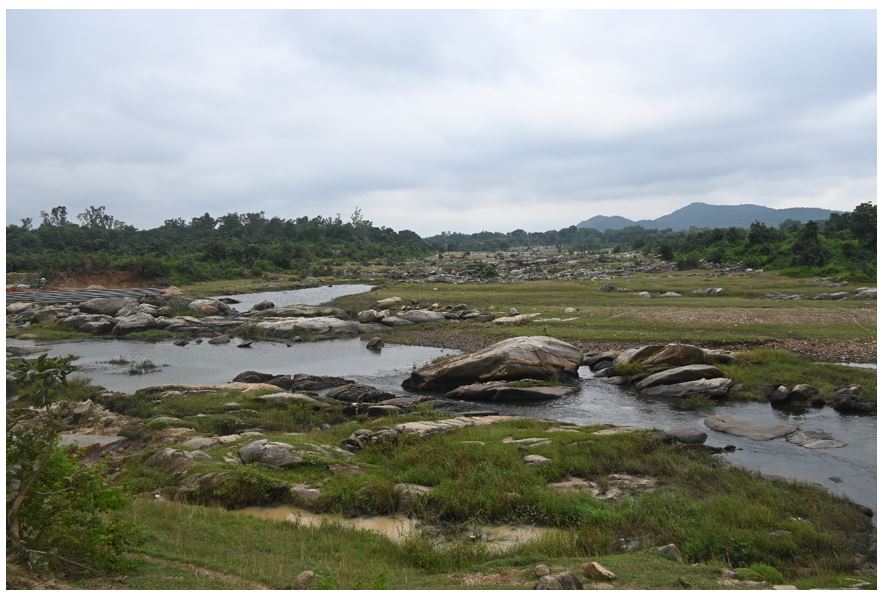
Figure 2: A View of the Jamui Hill Range with a stream of the Kiul River
Previous Research on Rock Art in the Jamui and Nawada Region
Dr. A K Prasad has worked extensively in this region. He was a colonel in the Indian Army who became interested in the rock paintings during his posting in this region with a counterinsurgency squad. The army has to conduct routine patrolling in the forest, which was the home ground of the Naxalites. The Jamui hill range is located on a strategic point near the boundary of the two states, Bihar and Jharkhand. Here, the four district boundaries also touch: Giridih and Kodarma in Jharkhand, and Jamui and Nawada in Bihar. The hills were heavily forested, and at that time, there was limited road connectivity, which served as a safe space for the Naxalites. When security forces conducted operations in one area, the Naxalites moved to the other district or the neighbouring Jharkhand through the forested hills.
Although a lot of work has been done on the rock art studies in India, this area has been an exception because of its inaccessible terrain and forests inhibited by large variety of ferocious animals and reptiles. Naxalite insurgency have been a major hindrance for the systematic exploration. Erwin Neumayer in his book Lines on Stone (2016) and Giriraj Kumar (2014) in the book Prehistoric Roots edited by D K Chakravarty has mentioned about the rock art of this region. However, these works have referred Dr (Col.) A K Prasad, who has worked in the districts of Nawada & Jamui of Southern Bihar and Kodarma & Giridih districts of Northern Jharkhand. He explored the region when he was deployed in the counterinsurgency squad. According to Dr Prasad (2003-04), he discovered 86 rock shelters (between 1993 and 1997) containing pictographs, along with microlithic tools, potsherds, and bones lying on the floor or in nearby areas of some of the rock shelters. He also discovered 10 petroglyph sites on open boulders in Kodarma district of Jharkhand. He gave a brief account of the discovered shelters, their locations, the dates of discovery, and the cupules & paintings depicted in them (Prasad 2003-04). He categorised the rock shelters on the basis of geographical location by following Dr Wakankar’s method of naming rock shelters. The shelters are divided into 18 groups (I to XVII and XXV). The groups are further sub-divided alphabetically, for example II.A.1, XI.A.3, XI.B.1, XVI.A.5 etc. The article also throws light on the subject matter, colour scheme and technique, superimposition and encrustation over the rock art. Prasad attempted to ascertain the chronology of the rock paintings on the basis of twelve painting styles he categorised. He dated the rock art from the Upper Palaeolithic period till the recent period. Prasad (2007) attempted to decode the meanings and purpose of depiction of three rock paintings. The cross inside a circle, a circle with six spokes having dots in the space between the spokes and a grid were studied. The rock paintings of this region mostly comprise the symbols and intricate designs (fig.3). The shapes include a combination of circles, squares, rectangles, wheels, crosses, rhombic meanders, spirals, concentric circles, grids, zigzag lines, dots, a combination of triangles and rectangles, etc. Symbol of a circle with six spokes and dots in space between the spokes painted in the rock shelter II.A.2 was used in the ritual performed for harming enemies. This is evident from the Kharosthi inscription along the rim of the circle, which reads Naha Saga Aminashanam madhatre which means Naha, the Saka forsakes (or injuries) Aminasena. The inscription is dated to the 2nd century CE. Prasad (2005-06) ascertained the meaning of the cross in the circle as a mark of the ritual performed to get success in the hunt. He also identified the same symbol as a symbol of prosperity (Sri or Lakshmi) based on a combination of Brahmi and Kharosthi inscriptions found in the rock shelters. The Santhals have the tradition of making grids to locate missing cattle or persons. Prasad mentions the depiction of Garuda-dhvaja, indicating the worship of Vishnu by a traveller from the Gandhar region, and the worship of Vishnu (Krishna) and his Sudarsana chakra by a Saka/Kushana Traveller.
Dr Prasad (2007; 2019) gives the same account of the meaning and significance of the symbols and Brahmi-Kharosthi inscriptions in his articles. He (2006) has mentioned about the rock paintings and inscriptions related to the Buddhist activities depicted on the walls and ceilings of the caves and discovery of artefacts such as clay & terracotta tablets and seals and portable clay Stupas found in the rock shelters VI.A.1, VI.A.2, VI.B.2 and XII.A.1 which were the hub of Buddhist activities for a long span of time, at least from 2nd century CE to 9th – 10th century CE. The ceilings and walls of the caves are decorated with Buddhist symbols and decorative lines, mainly painted in red. Prasad (2017) has discussed various aspects of the paintings, including the groups that may have produced them, when they were produced, why they were produced, to whom the message was addressed, the nature of communication, etc. He tried to ascertain the similarity between the rock art of this region and that of the San Bushmen of Africa, and to relate this to shamanistic practices. He also mentioned a similar ethnographic parallel practiced by the local population in nearby villages around the rock shelters. Where Bhagats and Bhagtinis perform rituals in a trance for the well-being of people or to rid people of evil spirits.
Rock Art of Jamui Hill Range, Bihar
The rock art of the Chhotanagpur Plateau region represents one of the earliest expressions of human creativity in eastern India, comprising pictographs and petroglyphs that reflect the symbolic, ritualistic, and everyday aspects of prehistoric and early historic communities. The painted rock shelters are distributed throughout the hill range. A total of 29 painted rock shelters have been documented during the field exploration. Out of them, 28 painted rock shelters are located in the Khaira block of Jamui district, and Taraun painted rock shelter is located in the Kauwakol block of Nawada district. More than 650 paintings have been documented during systematic exploration.
The rock paintings of the Jamui Hill Range mainly comprise symbols and intricate designs. There are a small number of naturalistic paintings. The designs include circles, squares, rectangles, wheels, crosses, spirals, rhomboids, meandering lines, concentric circles, grids, zigzag lines, dots, and combinations of triangles and squares.
The stick like human figures, rectangular box with double outline and abstract designs, outline of birds like owl and duck, reticulate figures, labyrinth with seven concentric circles, rider on horse, Sun symbol, floral motifs, rider on caparisoned horse holding a weapon in one and bridle in the other hand, Sun with an unidentified figure, hunting scene with a human holding a bow and arrow, human figure wearing a unique head-dress, complex figures with interconnected geometric intricate patterns, pipette figures with a combination of geometric motifs, abstract figures with chevrons, lines and dashes inside it, grid patterns, snake and lizards, rectangle and circle with human figure inside it, I shaped figures, plant motifs, woman figure, plus in a circle, antelope figure are the prominent motifs here.
Types of Paintings in Jamui Hill Range, Bihar
The motifs documented in the study area have been classified into 9 categories: a) Anthropomorphic, b) Zoomorphic, c) Avian, d) Reptile, e) Plant, f) Geometric, g) Abstract, h) Landscape or Map-like representation, and i) Symbolic. This classification has been done on the basis of nature, visual characteristics, subject and content of the motifs. Anthropomorphic motifs include the human figures, from simple stick figures to stylised and filled figures. There are also representations of humans dancing in a group. Zoomorphic motifs include depictions of bison, deer, antelope, horses, and camels. Avian motifs include a goose and a stylised bird figure. Turtle, snake and lizard-like figures are categorised under reptilian motifs. Plant motifs include floral and tree figures, whereas geometric motifs comprise circles, grids, linear or wavy patterns and chevrons. Abstract motifs constitute non-identifiable rock art depictions that don’t belong to any other categories. Symbolic motifs comprise culturally meaningful symbols such as Godhni motifs, Sun Motifs, labyrinths, plus-in-circle motifs, dots, cupules, and other important abstract symbols. Terrain or map representations are categorised under the landscape motif.
The Rock Paintings Present in the Jamui and Nawada Regions of Bihar
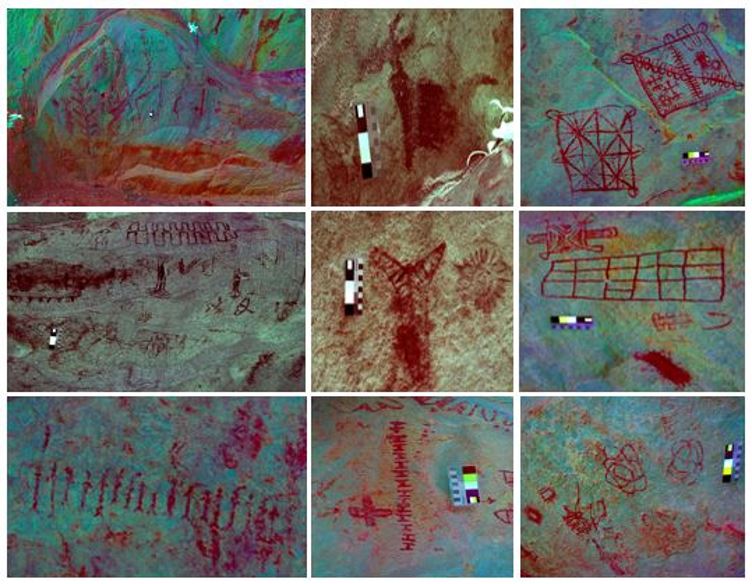
Figure 3: Figures Present in the Rock Shelters of Jamui, Bihar
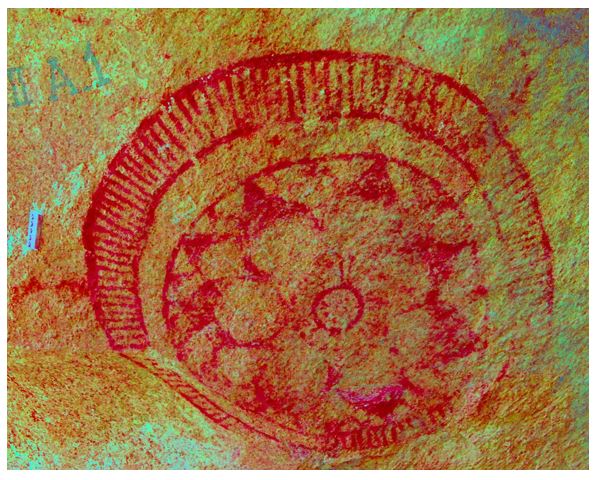
Figure 4: Decorative motif present in the rock shelter of Nawada district, Bihar
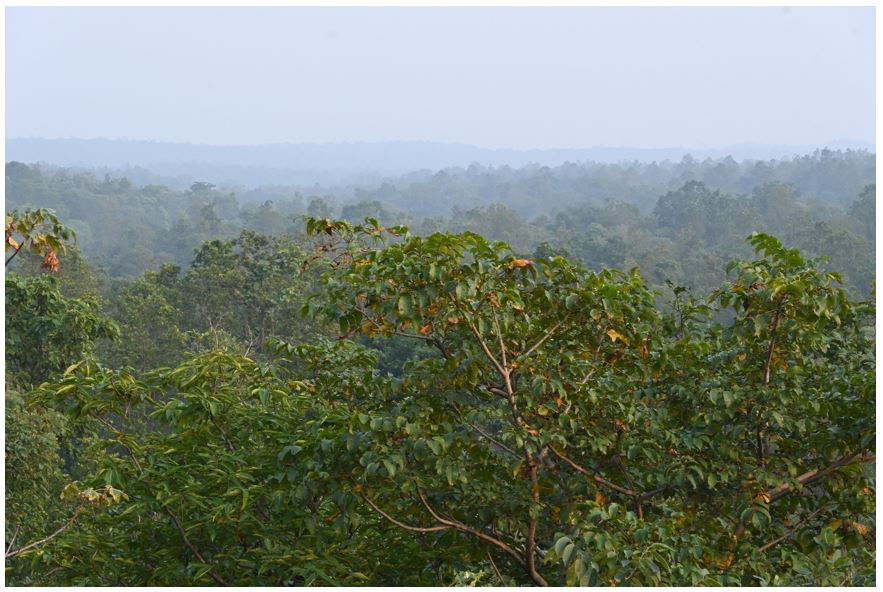
Figure 5: The Landscape of the Jamui Hill Range
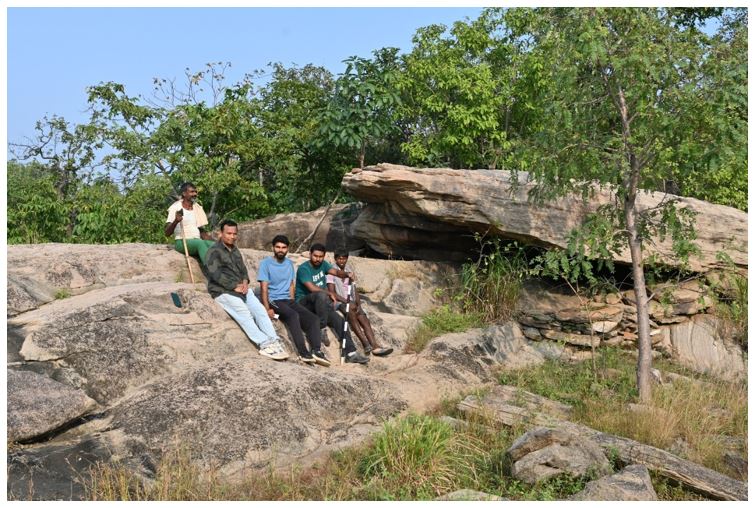
Figure 6: Author with field companions in front of the Kodarkatwa Rock Shelter
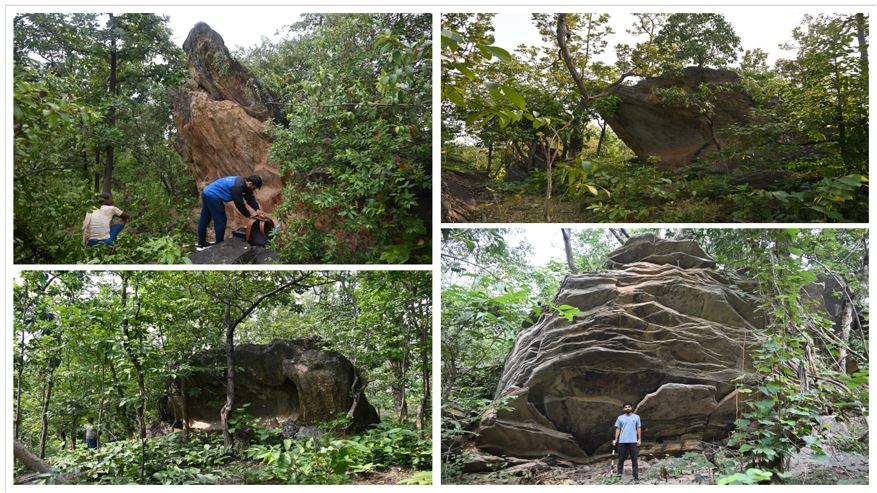
Figure 7: Nature and composition of the Painted Rock Shelters
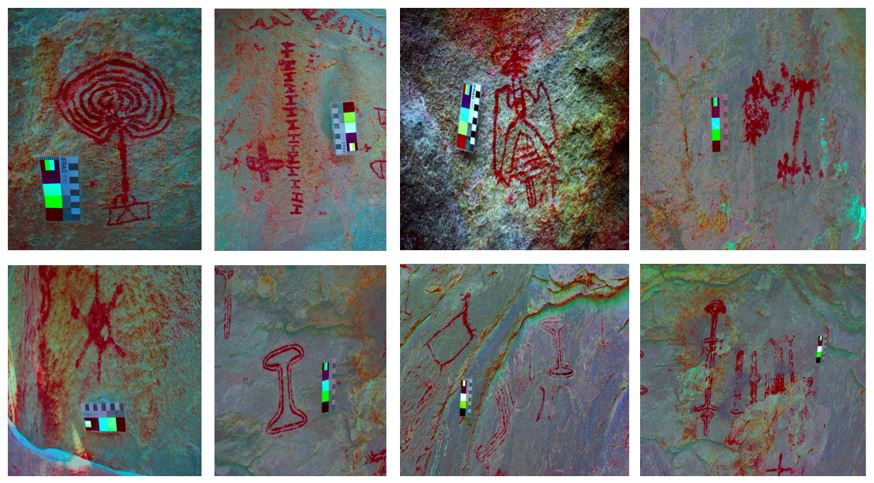
Figure 8: Abstract symbols present in the Rock Art
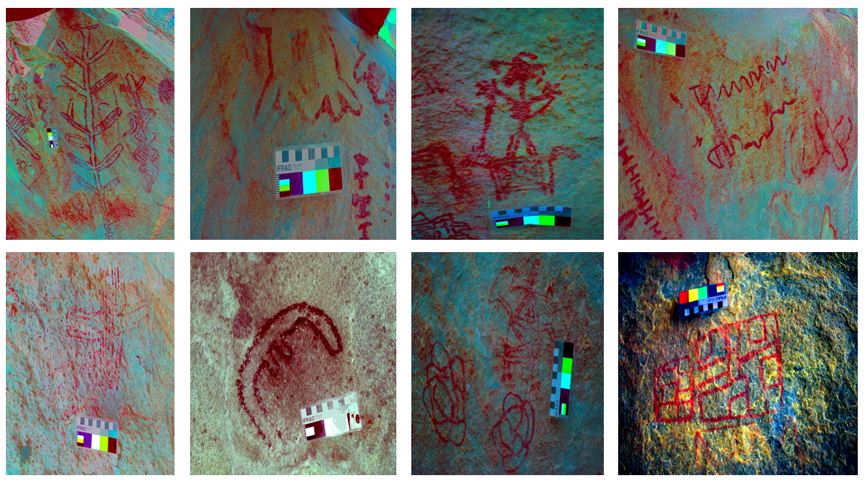
Figure 9: Symbols documented during January 2020 fieldwork
The systematic documentation and analytical study of the rock art of Jamui Hill Range is an important addition to the repository of rock art studies in India, especially in the north-eastern Chhotanagpur plateau region. Despite its rich archaeological wealth, this area has been understudied by archaeologists. This research will enrich the regional archaeological database and provide frameworks for interpreting symbols in rock paintings and ethnic art, tracing cultural continuity, and establishing meaningful ethnoarchaeological correlations.
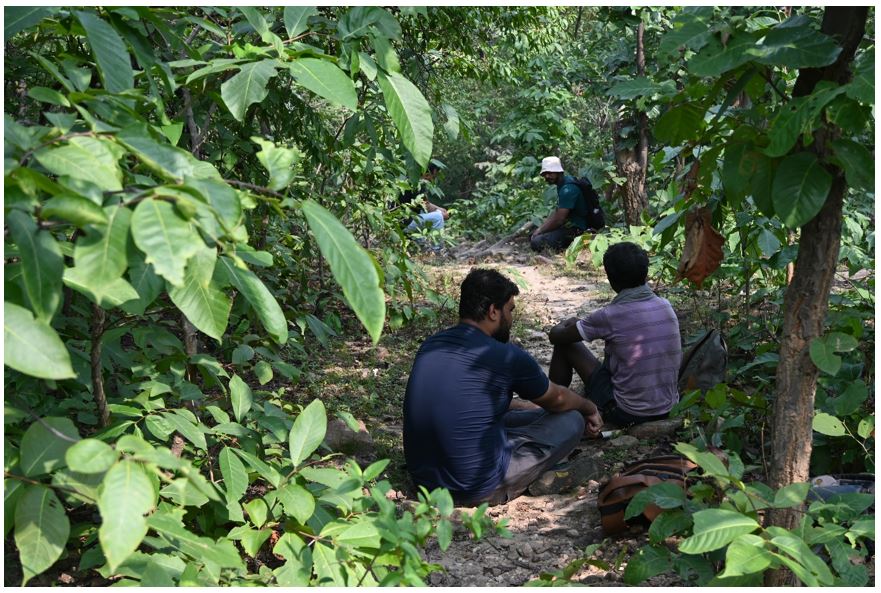
Figure 10: Team taking rest after exhaustive exploration in the forested rough terrain of Jamui and Nawada
Note: This article comprises a summary of my research work in the Jamui Hill Ranges conducted during my Masters dissertation in archaeology (2020) at Deccan College Post-Graduate and Research Institute, Pune, Maharashtra, and my Doctor of Philosophy thesis (2026) submitted to the Department of Ancient History, Culture and Archaeology at Nava Nalanda Mahavihara, Nalanda, Bihar. I have conducted fieldwork and an ethnographic study in this region with my friends and the local population.
References
Anati, Emmanuel. 1984. A world Planning for inventory, preservation and appreciation of Prehistoric Rock Art, in Rock Art of India – Paintings and Engravings, edited by K K Chakravarty, Published by Arnold-Heinemann Publishers (India) Pvt. Ltd., New Delhi. pp 26-33.
Briefing Book of Eastern Region, 2012.
District Disaster Management Plan [DDMP], (Jamui, 2022).
Ghosh, A. 2007. Prehistory Of The Chotanagpur Region, India, Part 1: Making Sense Of The Stratigraphy. The Internet Journal of Biological Anthropology. Volume 1, Number 2.
Indian Minerals Yearbook, 2021.
Kumar, G. (2014). Rock art. In D. K. Chakrabarti & M. Lal (Eds.), History of ancient India: Prehistoric roots. Aryan Books International.
Neumayer, E. 2016. Lines on Stone: The Prehistoric Rock Art of India, Manohar Publication, New Delhi.
Prasad, A. K. (2003-04). Important discovery of prehistoric rock paintings, ancient inscriptions and stone age tools in South Bihar and adjoining Jharkhand. Puratattva, 34, 68–91.
Prasad, A. K. (2005–06). Discovery of pictorial-cum-epigraphic depictions of performing local rituals of the ancient Magadha by the traders/travellers from the Gandhara region. Puratattva, 36, 235–239.
Prasad, A. K. (2007). Deciphering some symbols/geometric designs in the rock art of Bihar and Jharkhand. In P. C. Reddy (Ed.), Exploring the mind of ancient man. Research India Press.
Prasad, A. K. (2017). Rock art of Southern Bihar and adjoining Jharkhand in Eastern India: When, why and to whom? In Rethinking the past: A tribute to Professor V N Mishra. ISPQS.
Prasad, A. K. (2019). Understanding some symbols/geometric designs in the rock art of South Bihar and adjoining Jharkhand. In D. N. Tripathi & K. Ratnam (Eds.), India & France studies in rock art (pp. 63–76). Agam Kala Prakashan.